
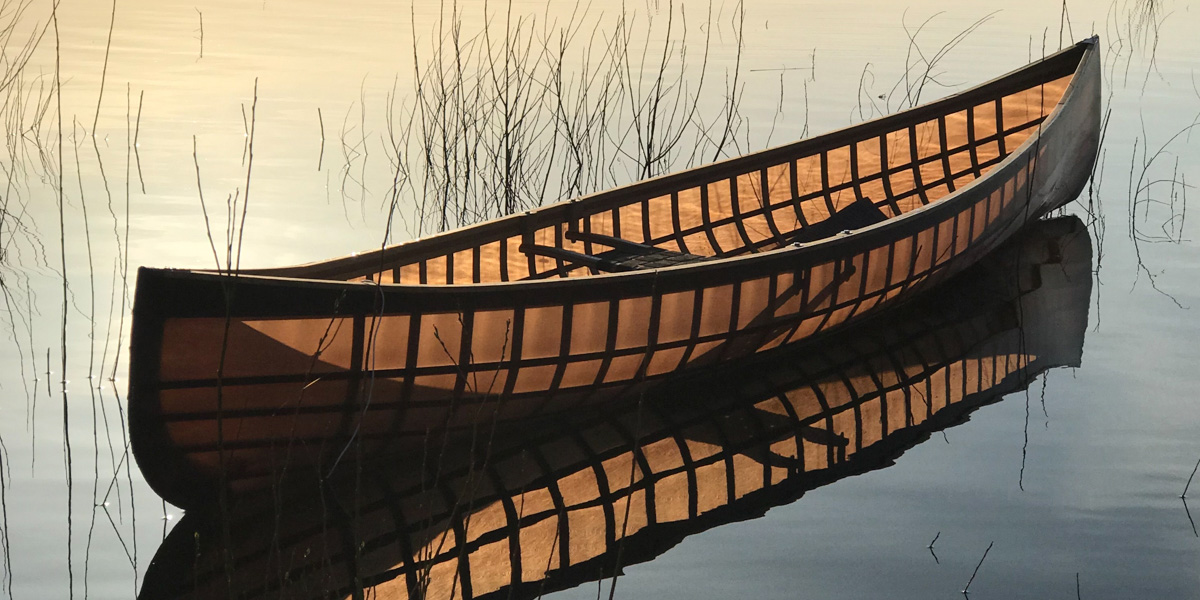
Our canoe building system allows you build short pack canoes, longer double paddle canoes, full size solo canoes, and full size tandem canoes. A personal sizing consult is included with your plan purchase, but here is a quick guide to the advantages and disadvantages of each different types of canoe.
Pack Canoes


10 to 13 feet long, 25 to 30 inches wide, and 9 to 11 inches deep in the center, weighing 14 to 22 pounds
These small canoes are typically paddled with a long kayak paddle sitting on the bottom of the boat.
Advantages: They are the easiest of all of our canoes to build, and they are very lightweight allowing access to remote launch sites that no other canoe can access. They also sail well across the wind with our simple pop up sail, and are very efficient and low speeds (around 3mph).
Disadvantages: They need to have low sides for elbow clearance which makes them unsuitable for rough water. They are also less stable than slightly longer canoes which means paddling on your knees is out of the question. Most serious paddlers will eventually want a long carbon fiber kayak paddle which can be quite expensive compared to a canoe paddle. Finally, drips from the paddle are unavoidable and you’ll need dry pants if you don’t want your legs to get wet.
Longer Double-Paddle Canoes


13 to 15 feet long, 25 to 30 inches wide, and 9 to 11 inches deep in the center, weighing 22 to 30 pounds
These canoes are typically paddled with a long kayak paddle sitting on the bottom of the boat.
Advantages: These are still relatively light and easy to build and they have enough volume and stability to carry a heavier load. They are also more stable making them a better choice for larger paddlers for whom a shorter pack canoe would need to be too wide to paddle comfortably. Experienced medium to small sized paddlers can shift from a sitting to a low kneeling position. These canoes also have a higher top speed, which is typically irrelevant for touring, but can be nice if you are paddling hard for fitness. These canoes also sit a little higher in the water, making them a bit more seaworthy in capable hands.
Disadvantages: Not quite as light or compact as pack canoes. Also if you get serious about double paddle canoeing you’ll eventually want a long carbon fiber kayak paddle which can be expensive compared to normal canoe paddles, also, the drips from the paddle into your lap can be extremely annoying. Longer double paddle canoes cannot sail across the wind like the shorter pack canoes, but can sail 45 deg to either side of downwind quite well.
Full-Size Solo Canoes


14 to 16 feet long, 28 to 33 inches wide, and 11 to 13 inches deep in the center, weighing 30 to 45 pounds
Full size canoes are typically paddled sitting up on a seat or on a kneeling thwart using a single blade canoe paddle, although some soloists also carry kayak paddles.
Advantages: Being larger and more stable than pack canoes, solo canoes can carry a lot more gear. They also allow for a higher sitting position that many people find more comfortable. This sitting position also allows the use of a normal canoe paddle and eliminates the annoying paddle drips that happen when sitting lower in a pack canoe.
Disadvantages: They are a bit more difficult and more expensive to build. They are also heavier. Paddling a solo canoe with a normal canoe paddle has a higher learning curve than pack canoeing or tandem canoeing.
Full-Size Tandem Canoes


16 to 18 feet long, 34 to 37 inches wide, and 12 to 14 inches deep in the center, weighing 44 to 55 pounds
Advantages: Just like full size solo canoes, full size tandem canoes have high cargo capacity, making it easy to pack for longer trips. They can handle larger waves, and the paddler sits up higher on a seat which some people find more comfortable.
Disadvantages: Tandem canoes are the largest, heaviest, and hardest to build of all of our canoes. If you are a beginning woodworker we strongly recommend building a pack or double paddle canoe first before diving into a tandem.